Sunday, November 3, 2013

Imprisoned Pussy Riot band member transferred to another prison

from cnn


From Alla Eshchenko, CNN
updated 1:15 PM EST, Sun November 3, 2013
Pussy Riot's Nadezhda Tolokonnikova was sent to a Mordovia prison last year for her part in a performance of a
Pussy Riot's Nadezhda Tolokonnikova was sent to a Mordovia prison last year for her part in a performance of a "punk prayer" critical of Vladimir Putin.
STORY HIGHLIGHTS
  • Nadezhda Tolokonnikova is now at a prison in Chelyabinsk, Russia, her husband says
  • But she hasn't been heard from since late October, he tells CNN
  • Authorities have 10 days to inform her husband of the transfer
Moscow (CNN) -- Convicted Pussy Riot punk rock band member Nadezhda Tolokonnikova has not been heard from since she was transferred from a prison more than 300 miles east of Moscow, husband Petr Verzilov told CNN on Saturday.
Verzilov said his wife was moved to a prison in Chelyabinsk, Russia, on October 24 or 25. She was relocated from a Mordovia prison.
Under law, authorities will inform her family about her transfer within 10 days of her arrival at a different penal colony, the country's Federal Penitentiary Service's press office told Russian news agency Interfax on Saturday.
Tolokonnikova was sent to Mordovia last year for her part in a performance of a "punk prayer" critical of Vladimir Putin, who was then Russia's Prime Minister and is now the country's President. The performance was held at a Russian Orthodox cathedral.
Found guilty of hooliganism, the 23-year-old musician was sentenced to two years in a penal colony.
She has less than six months left on her sentence, but on September 23, she declared the conditions at the prison to be intolerable and began a hunger strike.

Thursday, October 31, 2013

The Failure of the Rule of Law: Joshua "Skelly" Stafford Sentenced 10 years for Terrorism

from huffpost


Posted: 10/15/2013 4:28 pm

Joshua Stafford, 25 known as Skelly, was sentenced last week to 10 years in prison and life probation for his involvement in a terrorist plot to blow up a bridge near Cleveland. His co-defendants, Douglas Wright, 28, Brandon Baxter, 21, Connor Stevens, 20, and Anthony Hayne, 37, pled guilty to all counts and were sentenced between 6 years and 11 and a half years with life probation as well.
The statutory maximum sentence for their charges was life imprisonment.
One could argue that a 10-year sentence for the horrific act of attempting to blow up a bridge is too light a sentence. But in the case that has come to be known as the Cleveland 4, one would be dead wrong. (The case was originally referred to as the Cleveland 5 before defendant Anthony Hayne's post-arrest collaboration with the government.)
One explanation for the 10 year sentence is that the prosecutors and the judge know this to be one more of those cases where the government creates a terrorist plot and then foils their own plot and then a jury convicts the government created "terrorists". The public was never in danger. The defendants would never have come any closer to blowing up a bridge than they came to scaling skyscrapers and kicking over the bank signs atop them. This is neither law enforcement nor justice. This is a system wide failure of law enforcement and the judicial system. This is the failure of the rule of law.
Almost 90% of the so-called home-grown terrorist crimes that have been averted since 9/11 involved a government informant choosing vulnerable individuals and working on them for months, sometimes years until the informant snares the individuals into the government created conspiracy.
One well-known lawyer that has defended more than one of these cases tells me that no matter how poor the government's case--no matter how unreliable the informant or how many crucial conversations go unrecorded due to equipment failure or obvious edits--when the jury hears the "T word", the jury convicts. For this type of case he strongly recommends taking a plea. These cases cannot be won. The jury always convicts. Out of 508 cases in the last decade, every single defendant has either been found guilty or pled guilty.
Enter Skelly. He thought he could prove his innocence if given the opportunity to plead his case in open court. Skelly was so sure of his innocence and distrustful of the government-paid lawyers that he represented himself. By all accounts he had no idea how to proceed. On the first day of his trial he ended it by telling the judge that he was going to have to sleep in the next day and would not be returning to court. It was an agonizing experience for his friends and supporters to watch him bungle one question after another, one day after the next.
Skelly, 23 at the time, met several of his co-defendants at the short-lived Occupy Cleveland encampment. Skelly's anxiety levels made him sleepless for days and the perfect night watchman of the tent city. Until Occupy, Skelly had not been able to maintain a significant relationship with anyone. His self-harm, suicide attempts and frequent psychiatric hospitalizations landed him in a "therapeutic" high school. Due to the nature of the school there was a not an expulsion policy. According to records presented at trial, in order to keep Skelly from harming himself and others, by the end of high school he spent every day inrestraints.
Occupy gave Skelly a sense of community and purpose he had never experienced. More importantly, he had friends for the first time in his life.
2013-10-15-Image3.jpeg
Joshua "Skelly" Safford and Juss, 2 months before arrest on terrorism charges.
He found people he could relate to on an emotional level and who accepted him on his own terms. In addition to a new sense of possibility and empowerment they found at Occupy, the co-defendants had several things in common, including difficult childhoods and emotional issues to varying degrees, which lent to self-destructive behavior. Several had repeated suicide attempts and petty criminal priors.
After the Occupy Cleveland encampment closed Skelly and his new friends bounced between the lone Occupy "Info Tent" and a series of temporary communal living quarters. These young men were jobless and often hungry. Vulnerable, impressionable and rudderless, they were indeed a crime waiting to be crafted in the hands of a seasoned con-man out to make a buck, avoid yet another jail term and impress and advance the careers of his FBI handlers. Enter FBI paid informant Shaquille Azir, 39, who befriended Douglas Wright on the final day of Occupy before the tents were taken down.
Skelly and his friends were supposedly targeted by the FBI because of their propensity to violence. The prosecution points to a bank action as an example of this propensity. But a closer examination reveals just the opposite. Doug Wright had the idea of going into a high rise building that housed a bank and dropping a banner or toppling a bank sign from a great height, a direct action against the banksters, corporate America and the 1%. He then added that he would throw stink bombs as a distraction. Stink bombs smell. They are not bombs. They are pranks. One young man from OWS shook his head in disbelief and said, "Occupy kids shit talk a lot about direct actions that never happen. We should be able to brain storm non-violent forms of protest without having sleeze-ball informants and their FBI handlers decide that they're going to make some money and careers out of setting us up for crimes that they create and make happen by targeting the most vulnerable and troubled of our comrades. Then they get to be the big heroes, but it's really designed to make us, Occupy, look bad, discredit us. Funny how they go after the indigent anarchist kids not the college grads who might have an uncle who's a lawyer."
But even this non-violent direct action had very little chance of success according to Julia, Occupy Cleveland organizer who asked I not use her full name. Julia explained, "The way Doug looked; this disheveled kid would never have gotten past the front lobby, let alone to the roof. They would never have let him in the building. He would have had to go home."
By spring Occupy had defied skeptics' predictions as they survived the winter and maintained a constant presence via the lone "Info Tent". As a lead up to May 1st, International Workers Day, there was a festival planned that would culminate with scheduled Occupy and labor direct actions.
2013-10-15-Image34.jpeg
Joshua "Skelly" Safford and other, "Info Tent" Occupy Cleveland 2012.
A group of Occupiers, including Skelly, Brandon, Connor and Tony, moved into a warehouse rented by Occupy Cleveland. In order to live there one had to take turns manning the lone but symbolic tent that remained erect. The kids in the warehouse lived commune style and experimented with anarchist principles like shared possessions. They had few. They shared responsibilities like washing dishes, cleaning and cooking. They did so infrequently. In actuality, they often went without food, eating beets and spaghetti out of donated cans. Ramen became Occupy's potato chips; eaten raw with the spices sprinkled on it. But mostly they dumpster dived, eating the discarded, expired canned and packaged foods from the piles of trash behind grocery stores. Juss, 20, who lived at the warehouse and dated Brandon for a couple of months, explains, "Pretty much all of the food at the warehouse was dumpster dived. Though we had a lot of donated bread, and some of us went to food banks. I don't think I was ever more excited about cereal then I was the first day we went to the food bank."

Azir spent many months working on the young men, except for Skelly who was not brought into the plot until the very day it happened. Azir gave them jobs working on his apartment building, excluding Skelly. They had no car so he picked them up and dropped them at the construction site everyday. He fed them and gave them beer all day long. He dropped them off every evening with bags of pot, beer and Adderall. They worked twelve-hour days for $5.00 an hour. Exhausted, they picked splinters out of their arms and scratched their fiberglass-inflamed backs all night. They were sleep deprived but proud of having jobs and bragged about their cool boss to the others kids in the warehouse. Julia says, "It resembled a cult more than anything else with Azir as the guru. They were chosen because they were the most vulnerable and then he isolated them further. He took care of their needs, but kept them sleep-deprived. And there was the isolation due to long workdays. These kids had very tough early lives. We all call them kids because they were very young in a way. Both Connor and Brandon were under 21, and now here is a father figure taking care of all their needs. Then there was the Adderall [prescription amphetamines] and the sleep deprivation. That clouds your judgment. I can't believe they just brushed that off at trial as if it had no meaning when it goes straight to how they ended up at the bridge that night."
For months Azir set up meetings and pushed and prodded them to come up with a target. Ultimately, Azir suggested the target, pressuring the young men about the timing, and loaning Skelly's co defendants half the money to purchase the fake explosives. The young men, who were interested mainly in protective gear for a trip to anti-NATO protests in Chicago, left the meet-up on the hook for a large sum of money both to their boss and the FBI agent they believed to be an arms dealer.
Many conversations were reported where the young men could not decide what to do and what to target before Azir's suggestion. Concern for avoiding injury or death was expressed repeatedly. Few conversations between Azir and the co-defendants were recorded. The Cleveland 4, case as do all these homegrown terrorism cases, mostly relies on the testimony of the informant, in this case, Azir. So why would the FBI, the US Attorney, and later a jury give so much credibility to Azir's testimony? He was paid $5,750 for his services. He has convictions for grand theft, cocaine possession (1990), robbery (1991), tampering with records, aggravated theft, and four convictions for passing bad checks between 1991 and 2011. While working over time with the FBI on this case, he was charged with knowingly passing a bad check for $1,471.87 and a second felony for defrauding a Cleveland credit union for $2,165. He also violated the conditions of his parole. Not surprisingly, Azir's most recent convictions in November 2011, for grand theft and passing bad checks, resulted in no more than a slap on the wrist with 18 months probation despite a lengthy rap sheet.
Two days before the scheduled bridge incident was to take place, Connor Stevens, decided that he did not want to go forward. He wanted out. Connor wanted to know if he withdrew from the conspiracy could he still keep his job with Azir, according to FBI Agent Ryan Taylor. This is a telling example of how the 20-year-old Connor needed to keep his relationship with Azir. Eventually, Connor remained. We do not know the full extent of the psychological pressure applied by the informant. We do know that it was a long and meticulous psychological operation on all the co-defendants.
Except, of course, Skelly.
Julia explains, "As a group, there is an issue with entrapment over a longer period, but Skelly never spent any meaningful time with Azir before the day of the event. Skelly was just thinking his friends needed help and he was getting a free meal out of it. So he got in the car."
Skelly was brought in on the day they were all arrested. He was unaware of the plan, was not part of the planning process, and wasn't present when the explosives were procured. He didn't know what he was getting in that car for. He went when Azir offered a meal and cigarettes, two things he always had a hard time getting. Skelly testified in court that Azir asked him to move boxes, which ended up being the fake explosives provided by the FBI. The government, the FBI and the prosecution never contested that Skelly missed all planning, purchasing and important conversations. They did try to prove that he was filled in on the plan while in the car, that he placed the fake explosives under the bridge and that he did the detonation with a cell phone provided by Azir.
To prove that he was filled in on the plan in the car, the prosecution presented a recorded conversation. Only one person is heard talking. Skelly responds. "Huh." The transcript contains only one "huh" (not "ahuh"). Notes from friends in court who heard the recording say that the recording is peppered with "huh" throughout. Skelly testified that he could not hear.
Juss explains, "He never talks much, and even if he's there, sometimes he's not 'there'. He also checks out under stress, like when he told the judge he was sleepy and not returning for day two of the trial. The talk in the car was overwhelming to him so his coping mechanism kicked in and he heard and understood nothing."
Skelly contends that he thought they were tagging the bridge to spray paint it and that the boxes contained the paint. If he did check out, this is certainly an explanation. Julia offers an alternative explanation, "We know he disassociates under stress. He had no idea what he was doing. As the trail date approached and the stress level mounted it took 3 visits to get him to recall his shoe and pant size accurately."
Azir testified that Skelly followed instructions and detonated the fake bombs by dialing a set of numbers into the phone he provided. Julia said, "I definitely believe he could only have dialed the phone if someone was instructing him to push certain buttons in the same way the IQ test required his psychologist to read it to him as he did the problems. They're claiming he did it on his own. Kid can't remember his pants size."
In order for the terrorism enhancement to apply, which can add an additional 20 years at sentencing, the state must prove by a preponderance of the evidence that Skelly was aware that there was a political intent for his action. Blowing up a bridge in and of itself is not an act of terrorism. It is a crime. The government did not even contest that Skelly was not at any of the planning meetings or discussions. It is difficult to see how the state met its burden.

Nonetheless, Judge Dowd could not be dissuaded from applying the terrorism enhancement. Judge Dowd's decision to apply the enhancement and then vary downward is tantamount to an admission that the state will have its win at all costs, but he didn't buy any of it. This charge carries a 30-year minimum sentence yet the sentence he handed down was 10. But his hands were not tied. He was free to not apply the enhancements. What would make a person go along with this travesty rather than take a principled stand? Skelly is a young man with a history of childhood neglect, abuse, physical and mental illness, and the most horrifying treatment at the hands of the very institutions that should have been looking out for his well-being. He put his freedom and possibly his life (many feel it is unlikely that Skelly will be able to survive 10 years of incarceration) on the line, kept his ground and took a principled stand. Not one individual in law enforcement, the Office of the US Attorney or the courts that encountered his case had the courage and the independence of will to buck the corrupt system that condemned this young man last Monday.
Another disturbing aspect of this case is that Skelly was offered a 3-year non-cooperating plea. That plea was on the table until the day the trial began. Skelly refused to take it. Julia said, "We [the lawyers and the support group] all begged him to take the 3 year deal, right up to the end, especially when the judge denied his request for a continuance." According the mental health records presented at sentencing, Skelly has a 5th grade reading level, severe ADHD and the emotional maturity of a 12 year old. And here he was defending himself and pressed for time to prepare with inadequate access to the evidence against him and boxes upon boxes of material to read through.
At sentencing the state asked for 30 years, arguing vigorously that public safety hung in the balance. That the state can be willing to take a 3-year non-cooperating plea and when the defendant stands his ground and proclaims his innocence, turn around and ask for 30 under the pretext of public safety is punitive and cruel and has nothing to do with justice. It does however send a message loud and clear. If we say you're a terrorist then you are. But since we know that you aren't, just say you are, so we can declare another victory in the never-ending "War on Terror" and let you off easy.
But the case of the Cleveland 4 sends an additional message, and a more far-reaching one. If you are an activist kid and you dream of challenging the 1%, living in tents, scaling skyscrapers, dropping banners and embarrassing the banksters, do so at your own peril. Or maybe just stay home.
I asked Juss if she was still at the warehouse. She answered, "After the arrests, we were waiting to be raided. After all that's where 'the terrorists' lived. All the evidence would be there, right? No one ever came. So much for the dangerous terrorists. After that we leased the warehouse and dispersed. I support the boys and work on the Cleveland 4 website. But Cleveland is a black hole of activism, and after the guys got arrested I stepped back from that scene. I noticed yelling at empty buildings isn't productive. It just makes for nice photos and a news article, but nothing ever comes from it." Could that sentiment be the intended legacy of the Cleveland 4?

I would like to thank Julia and Juss, named sources and instrumental in helping me access all court records and FBI affidavits. I have linked to them on the Public Access to Court Electronic Records (PACER) database at PACER.gov as they are my primary sources. However, access to these records are behind a paywall. In 2008, Aaron Swartz, information freedom activist downloaded and released 2.7 million court documents stored on the PACER database. He believed the public had a right to access this information. In 2013, Aaron Swartz committed suicide after a long struggle with the US government over a similar release of data. Unlike Aaron Swartz, connected and widely admired whose persecution has inspired the US Congress to propose "Aaron's Law", Joshua "Skelly" Safford and his co-defendants are championed by few. Still both are examples from opposite poles of the economic spectrum of the criminalization of dissent and the systemic failure of therule of law.

Vivien Lesnik Weisman is currently directing The Reality Wars, a documentary film about the criminalization of dissent and the targeting of hacktivists, activists and journalists by the US government.

Monday, October 28, 2013

Arrests Made in "Craigslist Murder" of SoCal Father

from nbclosangeles


By Samantha Tata
|  Monday, Oct 28, 2013  |  Updated 4:13 PM PDT
View Comments (
20
)
|
Email
|
Print
Teen Gang Members Arrested in "Craigslist Murder"
Los Angeles Police Department
Ryan Roth, 17, left, and Markell Thomas, 18, are accused of robbing a father and his teenage son at gunpoint, then killing the father as the pair responded to a Craigslist ad allegedly posted by Thomas for a $300 smartphone.
A Craigslist ad linked to several armed robberies lured a Southern California father and his son to a deadly encounter with two teenage gang members in South Los Angeles, LAPD investigators said Monday.
Ryan Roth, 17, and Markell Thomas, 18, were arrested late last week in connection with the fatal shooting of Rene Balbuena near 92nd Street and Gramercy Place in South LA.
The 41-year-old father of two was in the area Oct. 19 responding to an ad for a $300 Samsung Galaxy with his son.
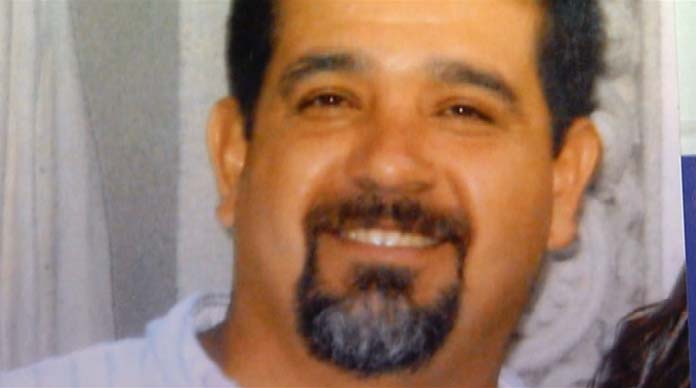
Investigators said Balbuena (pictured below) texted the suspects – who are believed to have posted the ad – to let them know he was there and ready for the transaction, LAPD Detective Chris Barling said in a news conference Monday afternoon.
That’s when Thomas allegedly jumped in the backseat of Balbuena’s car and pointed a gun at the victim’s 15-year-old son, demanding property.
Balbuena stepped out the car and was shot multiple times in the torso, allegedly by Roth, who was waiting outside the car, Barling said. Balbuena’s son suffered a non-life threatening graze wound.
The pair ran and the murder weapon is still outstanding, Barling said.
Thomas was arrested Oct. 24; Roth was arrested the next day. They are both believed to be part of the same Inglewood Bloods gang.
Investigators said the arrests came after they linked the slaying and attempted robbery (the suspects did not get any money from the Balbuenas) to at least seven stick-ups in the Baldwin Hills area. Those heists all involved the same Craigslist ad for a Samsung Galaxy smartphone and happened between Aug. 2 and Oct. 7, Barling said.
Thomas is believed to have been involved in all seven of those robberies, Barling said.
Both suspects were charged by the LA County District Attorney’s office Monday with one count each of murder, attempted murder, robbery with special circumstances and gang allegations. The 17-year-old was charged as an adult, Barling said.
Additional charges may be filed against Thomas, pending further investigation into other alleged Craigslist crimes, he said.
More Southern California Stories:

BANKRUPTCY COURT MUST DETERMINE WHETHER CREDITOR ACTED IN BAD FAITH FOR SANCTIONS

from bloomberglaw


Oct. 4 –The U.S. District Court for the Eastern District of New York Sept. 17 declined to enter a sanctions award against a creditor because the bankruptcy court needs to determine whether the creditor acted in bad faith in violating an order the debtor and creditor entered into regarding the demolition of the debtor’s building or erection of a fence surrounding the debtor’s building (MA Salazar, Inc. v. Inc. Vill. of Atlantic Beach, E.D.N.Y., No. 2:12-cv-03458-ADS, 9/17/13).
Granting the debtor’s appeal in part, and denying it in part, Judge Arthur D. Spatt remanded the case to the bankruptcy court for further findings on the automatic stay and whether it was lifted or ever existed in the first place, and whether the court’s inherent authority supported sanctioning the creditor for proceeding with demolition.
The court directed the bankruptcy court to clarify whether it lifted the automatic stay or the stay never existed in the first place as an exception for police and regulatory powers. The bankruptcy court must also consider under its inherent authority whether it should have sanctioned the creditor for proceeding with demolition and acted in bad faith.

PROPERTY IN STATE OF DISREPAIR

Debtor MA Salazar Inc. owns a parcel of property in New York that is used as a mixed use commercial and residential building. Following a trial, the debtor was found guilty of maintaining unsafe premises in violation of the New York State Property Maintenance Code.
The debtor filed an order to show cause in state court, seeking a temporary restraining order (TRO) prohibiting the demolition of the building. The court denied the request for a TRO because the property had fallen into a state of disrepair and the extent of the disrepair rendered the project unsafe.

CHAPTER 11 FILING

Subsequently, the debtor filed for Chapter 11 protection, indicating that the filing of the petition was “necessitated by the pending demolition of the Building by the Village.”
On Oct. 21, 2011, the Inc. Village of Atlantic Beach’s mayor Stephen R. Mahler sent a letter to the bankruptcy court stating that the Village was “mindful” of the automatic stay and would delay demolition, but wanted to disconnect the utilities in the building. The bankruptcy court issued an order authorizing the Village to discontinue utility service to the building and allowing the debtor to either consent to the demolition of the building, or erect a fence surrounding the building (fence order). Under the fence order, it would be unlawful for any person to enter, remain, or reside on the debtor’s property. It also obligated the debtor, in the event that it became aware of any person entering, remaining, or residing on the property to take all necessary steps to remove them from the property.
Subsequently, the debtor filed an affirmation attesting to the fact that a fence had been erected around the building.

POLICE, REGULATORY POWER EXCEPTION

The Village then moved for the entry of an order vacating the stay in effect preventing the Village from demolishing the building. The debtor opposed the motion.
The bankruptcy granted the Village’s motion, and instructed it to submit an order to that effect. According to the bankruptcy court, the case was a “poster child” for the “police and regulatory power” exception to the automatic stay provision of the Bankruptcy Code. The bankruptcy court reasoned that the stay was inapplicable for the reasons set forth in the Village’s papers.
Less than 24 hours later, with the fence order still in effect, and without a formal order regarding the automatic stay, the Village entered onto the property and began the demolition of the building. The Village never submitted a proposed order to the bankruptcy court regarding the automatic stay.
The debtor then submitted a proposed order to the bankruptcy court requesting that the automatic stay be vacated. The bankruptcy court entered an order that “the automatic stay is vacated to the extent requested in the motion so as to allow the Village to demolish the structure located on the Debtor’s Property.”

DEBTOR SEEKS SANCTIONS

Subsequently, the debtor filed a motion under Bankruptcy Code Section 362(a) and 362(k), seeking sanctions against the Village for violating the automatic stay and to hold the Village in contempt for violating the fence order.
The bankruptcy court concluded that the Village’s action was within the police power and, therefore, the automatic stay did not apply. The court also expressed reservations about sanctioning the Village for violating the automatic stay. Further, the court noted that Section 362(k) authorizes recovery of damages for individuals, not corporations such as the debtor.
The bankruptcy court denied the debtor’s motion for sanctions, noting that there was no order that could hold the Village in contempt of relative to Section 362 because it was signed after the building was gone. The court also indicated that imposing sanctions with respect to the fence order would not be equitable because that order was ambiguous as to the issue of demolition.

ARGUMENTS ON APPEAL

The debtor appealed to the district court, arguing that its commencement of the Chapter 11 case triggered an automatic stay. The debtor contended that the Village’s actions in demolishing the building prior to entry of the lift stay order foreclosed the debtor’s ability to seek further judicial intervention to stop the demolition of the building. According to the debtor, while a corporate debtor may not obtain damages under Section 362(k), a bankruptcy court retains the power to find, and sanction for, violations of the automatic stay under Section 105.
The debtor also contended that the bankruptcy court erred in finding that the Village was not in contempt of the fence order.
The Village, however, argued that it did not violate the automatic stay because no such stay was in effect in the first instance because it was acting under its police powers. The Village also contended that the debtor failed to preserve its request seeking sanctions under Section 105 for violating the automatic stay. The Village asserted that it did not violate the fence order.

DECLINES TO CONSIDER SANCTIONS

The district court concluded that the debtor failed to show that a theory based on the imposition of sanctions under Section 105 with respect to the automatic stay was properly before the bankruptcy court. The debtor failed to raise and preserve an objection during the bankruptcy proceedings, the court said, and cannot now raise it on appeal. The court will not consider an “unpreserved issue unless failure to do so will result in manifest injustice,” the court said. Because no manifest injustice is apparent, the court declined to consider whether sanctions were warranted under Section 105(a) with respect to the automatic stay.
Alternatively, the debtor contended that the bankruptcy court retained its inherent authority to sanction the Village for violating the automatic stay, which, in the debtor’s view, was in place at the time of the demolition. “Inherent-power sanctions ordinarily require a clear showing of bad faith on the part of the party to be sanctioned,” the court said. Imposition of sanctions under a court’s inherent powers requires a specific finding that an attorney acted in bad faith, and are appropriate only if there is clear evidence that the conduct is “(1) entirely without color and (2) motivated by improper purposes,” the court said.

BANKRUPTCY COURT NEEDS TO CLARIFY

According to the court, it appears that the bankruptcy court did not consider the issue of bad faith, but rather declined to award sanctions with respect to the automatic stay on the ground that there was no formal prior order of the court for which the Village could be held in contempt.
The court directed the bankruptcy court to clarify whether it lifted the automatic stay or the stay never existed in the first place. The bankruptcy court is directed to consider whether, pursuant to its inherent authority, it should have sanctioned the Village for proceeding with the demolition in that fashion, and whether the Village acted in bad faith.

VIOLATED FENCE ORDER

With regard to the fence order, the court found that because the demolition required entry of persons onto the debtor’s property, the Village violated the fence order. The bankruptcy court’s finding to the contrary is reversed, the court said. Whether the bankruptcy court had the authority to issue the fence order, and thereby halt demolition efforts, presents a separate question the parties failed to adequately address, the court said.

IMPOSE SANCTIONS?

The court determined that absent a violation of the specific provision of the Bankruptcy Code, Section 105(a) does not provide an independent basis for relief for the debtor.
The bankruptcy court, however, retains the inherent authority to enforce its own order, the court said. Therefore, the bankruptcy court should determine whether under its inherent authority the Village acted in bad faith in violating the fence order.
The court granted the debtor’s appeal in part, denied in part, and remanded to the bankruptcy court for further findings, including whether:
(1) that court lifted the automatic stay or the stay never existed in the first place;
(2) that court’s inherent authority supported sanctioning the Village for proceeding with the demolition without submitting a proposed order to that court regarding the stay; and
(3) that court’s inherent authority supported sanctioning the Village for violating the Fence Order.

Robert J. Lester of Lester & Associates, P.C., Garden City, N.Y., represented the appellant/debtor; Michael Anthony Miranda, Maurizio Savoiardo, and Robert E. Hewitt III of Miranda Sambursky Slone Sklarin Verveniotis LLP, Mineola, N.Y., represented the appellee/creditor; and Stan Yuon Yang on behalf of the Office of U.S. Trustee, Central Islip, N.Y.
To contact the reporter on this story: Diane Davis in Washington at ddavis@bna.com
To contact the editor responsible for this story: Jay Horowitz at jhorowitz@bna.com